The Construction Contract: 13 Lessons for the Saavy Construction CEO
Lesson 1
Choose Your Game Wisely
I read the finding of a research recently that children learn and retain more through play than they do through formal instruction. One of the things children learn through play is strategy. Children quickly learn to choose the games they play wisely if they want to win.
We were at the playground one fine summer’s day, when I saw a group of children playing. Mums casually sitting and chatting with each other. They appeared to know each other really well. My son was in the sandpit doing his usual construction of a ravene when the group of children of varying ages started arguing. They couldn’t decide on the game to play. Each one had a game they wanted to play and could not get buy-in from the others. Eventually they sorted it out, like children often do, and settled on a game to play. A short while after, a few of the children left the game, clearly angry that they were not winning and decided that they didn’t want to play. The Mums decided that maybe the children had had enough of the playground and packed up and left, children in tow. The following week, we went back to the playground and there were the same group of children and Mums. On this occasion, the children were split into groups, each group playing a different game, and each seemed to be satisfied with their decision. It appeared that the children had split based on the games they wanted to play. The children were learning through play, about strategy.
At first, the children couldn’t decide on the game to play, each child knows their strengths and weaknesses, as well as their likes and dislikes. No doubt, each child wanted to play a game that they loved and knew they could win. But this created a problem, because it meant that there were a lot of stakeholders involved and to get buy-in from. At somepoint therefore, they had to decide whether playing in a big group is more beneficial than playing in a small group, where there are less stakeholders, less friction and a higher probability of them winning the game. This is the point of decision and the first lesson in strategy.
Choose your games wisely.
Reflecting on the playground squabble, I could see so many parallels between what happened there and how things often play out in construction. I have found that in construction there is often a race to the bottom because so many CEOs are failing to choose their games wisely. For some reason, these CEOs haven’t experienced the playground scenario above, missed the lesson and havent learned the basic of a good strategy. So in the industry, you will find that most construction companies are mirrors of each other, they claim to do everything for everyone and struggle to get good profit margins. There is a failing business model, often taken from larger construction companies, that permeates the industry, very few willing to ask if the model actually works. Having worked with many of these large companies, I have seen behind the curtain and the business model doesn’t even work for them, but whatever shortfall is experienced can be quickly absorbed by the group and parent company. For other CEOs, this will not be the case and so we see the failure in the hundreds, sometimes thousands of construction companies that go into administration and liquidation each year. The numbers are staggering.
Your business model is useless without a good strategy. So couple a failing business model with poor strategy and you will most certainly get a business on the fast track to administration.
The choosing of the game starts at the corporate level and goes all the way down to the project level, as you get to decide the type of business you run, to the projects you add to your portfolio, to how your projects are managed, which ultimately cascades into your construction contracts. What you need to understand is that snuggled in between your business model and your strategy is your contract (and other things as well, but we are focusing on contracts).
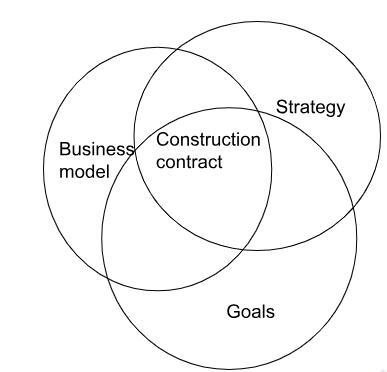
Diagram 1: Position of construction contract in your business
Your construction contract to be more precise. Both will flow down into the:
The type of contracts you pursue;
The T&Cs you sign up to;
Whether you negotiate or not;
How you negotiate;
The systems and process you invest in;
How the contract works in reality;
And so much more.
I have been fortunate enough to work with a specialist contractor. The CEO, let’s call him Bob, headed up a £50m turnover company. A former tradesman, he started the company with a colleague, also a former tradesman. Together they had built a wonderful company with multiple members of staff, doing specialist work. Whenever I meet potential clients, I love finding out how they got started and what really sets them apart from the crowd. Bob explained that it took years and hard graft to get the business to this point. He now had a sensible team and a board of directors to help him go further. He now felt ready to get someone like me in to help with their contracts. He went over the evolution of their contracts and strategy with me and it was clear that Bob still approached contracts like a new tradesman turned business owner. He feared negotiations, often took the first draft, have no contract management system in place and needed to align his contracts with his business to really drive growth.
When Bob started he did any and everything. He was a small 2-men shop, so they didnt negotiate, they felt lucky to get a deal and ran with it. Over time, their expertise grew and their business grew, they specialised in the “money maker” but they were stuck in the old habits. Unlike some CEOs, Bob recognised that the business no longer resembled what it was, and as he got better business coaching, direction and strategic advice, he knew that his contracts needed to be improved.
When I met with Bob and other senior members of his team, we went over the business model, the strategy and their business goals. At this stage, the business will share very sensitive details so that I can understand what they are trying to achieve. If I understand the game they want to play, I can cascade that into their contract playbook, their contract strategy, their negotiation strategies and ultimately help them make a alot more money by ensuring that the contracts they enter into reflects the targets they have set for the business. And we achieve this by focusing on these four key things:
Choose whether you want play. Now when a contract drops in Bob’s lap, they know what good and great looks like for them and they get to choose whether they want to play. In other words, Bob gets to decide if a contract is right for him. No longer do they chase every contract or put out a lot of tenders, wasting precious resources on contracts that will not work for them, (coming back to their strategy and goals). Bob has a checklist of things to look for and some minimum (benchmarks) that each contract must fulfil to pass the first stage of deliberation. Now Bob is laser focused, because he wants to move beyond £50m annual turnover and really push his business forward.
With whom do you play. One of the lessons from the playgroun scenario above, is the importance of knowing who to play with. We can’t always control the players and choose who we play with, but we do get to do the due diligence and research on the people we play with. Thanks to the internet, some clever startups out there and information that can be easily found online, you too can do your due diligence on your counterparty (the other side) and determine whether this is someone you want to play with. Bob has had the misfortune of skipping this step in the past and ended up with unpaid invoices, a main-contractor that went bust and having to quickly find additional contracts to pick up the shortfall in revenue. Now Bob has a step-by-step process for vetting his potential clients. If they don’t pass, Bob doesn’t bother to move to the next stage.
Where do you play. The interesting thing that came out of my time with Bob, is the confidence that he and his team got from the exercise. There is a lot more clarity around where they fit within the market place (see diagram above), because now they understand their business model, they grasp the strategy they have selected and they have big goals that all flow into how they do contracting. I call it Contracting for Sucess, but more on that later. They can now see how all the years of hard graft is paying off, because they have increased their bargaining power and by virtue of that they can choose where they play their game.
How you play. By being a specialist and honing their craft, Bob’s company has set itself aprt from the 97%. I can still hear Jim Rohn in my ear saying “don’t follow the 97%, become a member of the 3%”. And the same is true in construction business as well. The 97% is doing everything for everyone, which is why they have no real leverage when it comes to negotiations. Not so with Bob. We created his contracting strategy, his playbook and protocols on what an ideal contract looks like for this business. And because Bob’s business is so well-known for a specific thing, we leveraged it for Bob’s benefit.
Benefit of this is that it sets the tone for construction contracts. And everything going forward in this series will revolve a lot around this game of strategy.